In the second episode of The Lung Lab, Dr. Lisa Lancaster – director of the Interstitial Lung Disease (ILD) program at Vanderbilt University and chief medical officer at Endeavor Biometrics – discusses the long and winding road many lung disease patients often face on their way to diagnosis.

A pulmonologist with over 25 years of experience and 85 clinical trials behind her, Dr. Lancaster is one of the most respected voices in the ILD space. She shares her perspective on the emotional challenges of delivering life-changing news, the promise of emerging therapies, and the future of ILD treatment she hopes to see.
We are thrilled to announce the launch of The Lung Lab, our new podcast exploring how OSIC is redefining rare and progressive lung disease— from how it is detected, to how it is measured, to how it is ultimately treated.

Hosted by our Executive Director Elizabeth Estes, each episode looks at how rare and progressive lung diseases are being understood today and where things may be heading next, from earlier detection to new approaches in treatment. The series brings together clinicians, scientists and technologists working at the intersection of imaging, data and disease.

In our first episode, “What If We Could? The Story Behind The World’s Largest Lung Disease Database,” Elizabeth discusses how OSIC began and shares a preview of the upcoming season.

New episodes will be released every other week over the next three months, and will explore the real challenges holding lung disease research back – including inconsistent measurement and fragmented data – and highlight the breakthroughs and the people emerging to solve them.

The goal of this new podcast is simple: to bring together the people and ideas shaping what comes next, and to make the conversation more accessible.

And the work is grounded in something bigger: the need to make real, and, hopefully, radical progress on behalf of patients, caregivers and families who are living with these diseases every day.

More than 70 leading experts from 40+ world-class institutions convened in Amsterdam on September 27, 2025 for the fourth annual OSIC Member Meeting and AI Biomarker Innovation Showcase. Watch highlights from this inspiring day.

A Q&A with Dr. Ryoung Jang, Clinical Research Lead

Coreline Soft is passionate about developing Ai imaging solutions that make a real difference for patients.

Operating under the slogan “Staying Ahead of Symptoms,” the mission of this South Korea-based company is to help healthcare professionals around the world detect diseases before symptoms even occur. With only a single chest CT scan, Coreline Soft’s medical AI solutions can identify  various findings — such as long nodules, emphysema and interstitial lung abnormalities — enabling earlier diagnosis and treatment of lung diseases.

We spoke with Dr. Ryoungwoo Jang, the company’s clinical research lead, about how its AI-powered CT solutions are advancing early lung disease detection and clinical decision support. Below is an excerpt from our conversation.

A Q&A with Chuck Hatt, Vice President, Medical & Clinical Affairs

4DMedical’s groundbreaking lung imaging technology is transforming pulmonary care.

Since 2013, this global medical technology company and long-standing OSIC member has been helping pave the way for more precise, personalized, and effective respiratory care through the use of advanced imaging and AI solutions. Its unique and non-invasive imaging technologies provide clinicians with unprecedented insights into pulmonary function, ultimately helping improve the diagnosis and treatment of lung disorders, including unexplained dyspnea, asthma, COPD, fibrosis and other restrictive airway diseases.

We spoke with Chuck Hatt, 4DMedical’s vice president of medical and clinical affairs, about the company’s commitment to advancing lung health, its cutting-edge work, and how the OSIC Cloud Data Repository has directly contributed to bringing its revolutionary solutions to market. Following is an excerpt from our conversation.

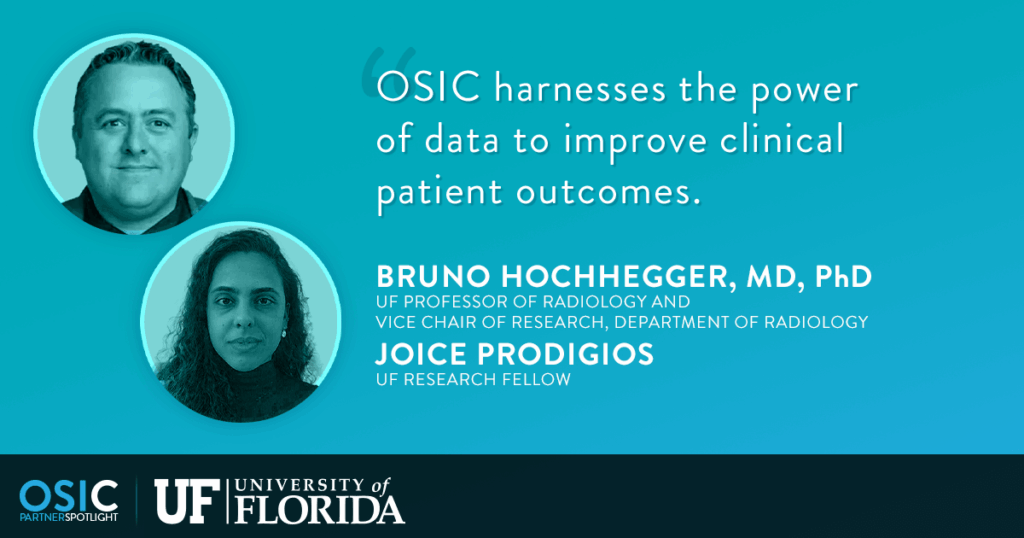
A Q&A with Bruno Hochhegger, MD, PhD & Joice Prodigios, Research Fellow

The University of Florida (UF) has been driving innovation since 1853. Ranked among America’s best public universities, UF is known for its strong academic programs, state-of-the-art research facilities, and international community of collaborators. This world-class destination for students, scholars and innovators prides itself on “pushing the boundaries of the unknown to answer the next big question.” And it’s this commitment to academic excellence and strides in the field of artificial intelligence  that have led to UF’s game-changing research and industry innovations across all disciplines. We spoke with Dr. Bruno Hochhegger — UF professor of radiology and vice chair of research, department of radiology — and UF Research Fellow Joice Prodigios, about the most valuable aspect of OSIC membership and their hopes for the future of our collaborative organization. Following is an excerpt from our conversation.

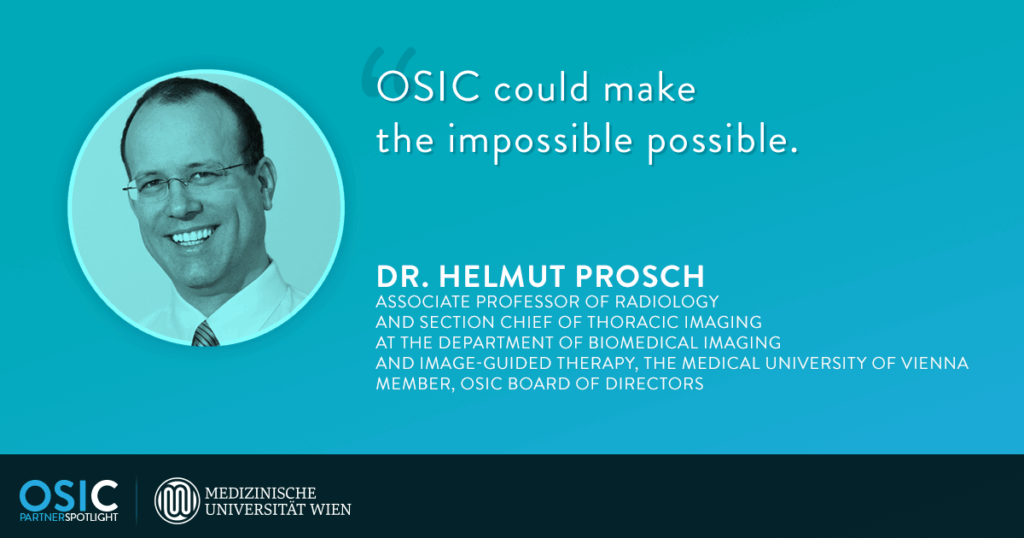
A Q&A with Helmut Prosch, MD

The Medical University of Vienna (MedUni Vienna) is one of the oldest and most renowned medical education and research facilities in Europe. Founded in 1365 as the Medical Faculty of the University of Vienna, today MedUni Vienna boasts almost 8,000 students; more than 6,000 employees; 30 departments and two clinical institutes; 13 medical theory centers and numerous highly-specialized laboratories; and the Josephinum, the world’s largest collection of medical history. It is also one of Europe’s leading research establishments in the biomedical sector. Its rich history and tradition attract some of the world’s most innovative medical minds to conduct cutting-edge research, impart forward-thinking knowledge, and ensure the best possible care for patients. We spoke with OSIC Board Member Dr. Helmut Prosch — MedUni Vienna’s Associate Professor of Radiology and Section Chief of Thoracic Imaging at the Department of Biomedical Imaging and Image-guided Therapy — about the value he finds in being an OSIC member. Following is an excerpt from our conversation.

A Q&A with Deborah P. Brown

Founded more than 115 years ago by a group of volunteers dedicated to ending the lung health threat at the time — tuberculosis — today, the American Lung Association is the leading organization working to save lives by improving lung health and preventing lung disease. The non-profit has extended its original mission to other respiratory diseases and is focused on the following four strategic imperatives: to defeat lung cancer; to champion clean air for all; to improve the quality of life for those with lung disease and their families; and to create a tobacco-free future. More than 20 million people each year are helped by American Lung Association programs and initiatives. Thanks to its donors, volunteers, program and event participants, and staff, it is America’s trusted source for lung health education, lung disease research, support programs, services and advocacy. We caught up with OSIC Board Member Deborah P. Brown, the American Lung Association’s chief mission officer, about the importance of collaboration in the fight against IPF and ILDs, and why a global approach to sharing information will ultimately be life changing for patients. Following is an excerpt from our conversation.

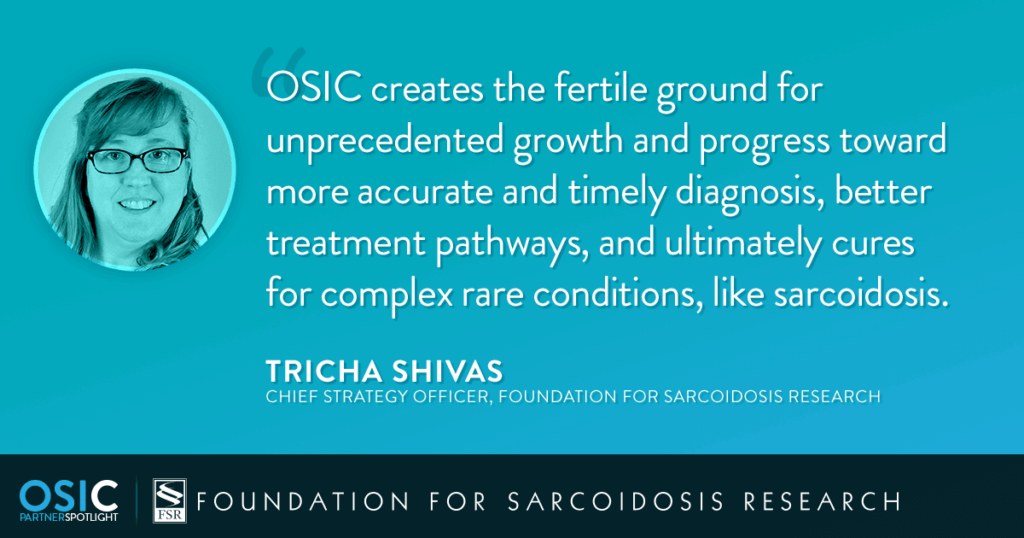
A Q&A with Tricha Shivas

Established in 2000, the Foundation for Sarcoidosis Research (FSR), is the leading international non-profit organization dedicated to finding a cure for sarcoidosis and improving care for sarcoidosis patients through research, education and support.

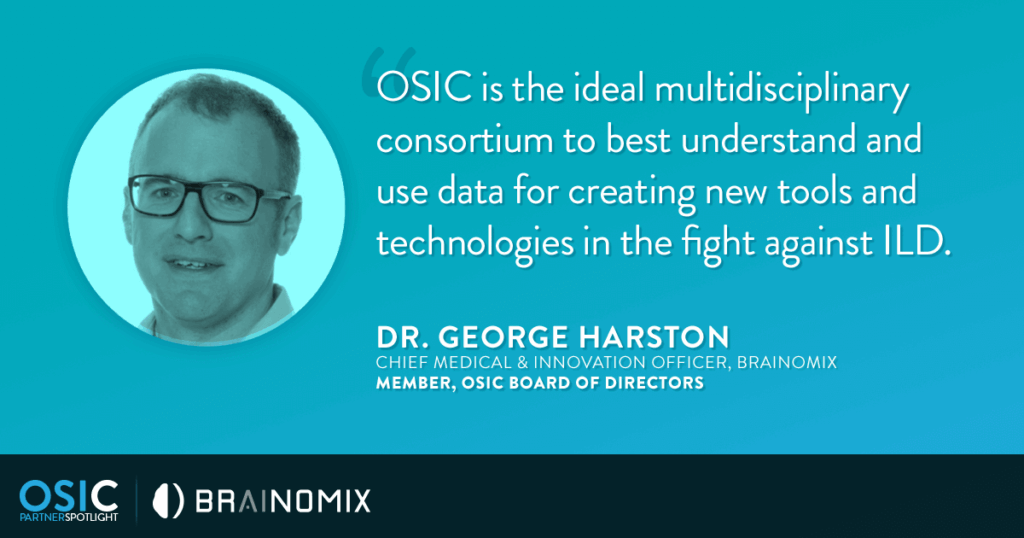
A Q&A with Dr. George Harston

Since launching as a spin-out from the University of Oxford, Brainomix has developed award-winning, AI-powered imaging biomarkers and software solutions that assist physicians around the world in improving both diagnosis and treatment decisions. The Oxford, UK-headquartered medical software company first gained attention with its e-Stroke platform, a CE-marked collection of tools that use advanced AI algorithms to provide doctors with real-time interpretation of brain scans that can help guide treatment and transfer decisions for stroke patients. Considered the world’s most comprehensive stroke imaging solution, it has been widely adopted across multiple healthcare systems worldwide, in more than 30 countries. Building on this legacy and success, Brainomix has since expanded beyond stroke into new areas where there are similar unmet needs and opportunities to improve diagnosis and treatment. These include cancer and lung fibrosis, notably the assessment of interstitial lung diseases (ILDs). We spoke with OSIC Board Member Dr. George Harston — Chief Medical & Innovation Officer at Brainomix and a practicing Consultant Physician at the John Radcliffe Hospital in Oxford, England — about the company’s new e-ILD solution, and the value of collaborating with OSIC and its members.