A Q&A with Helmut Prosch, MD
Thanks to the dedication and commitment of members like you, OSIC has made much meaningful progress in the past five years. What OSIC accomplishment are you most proud of so far?
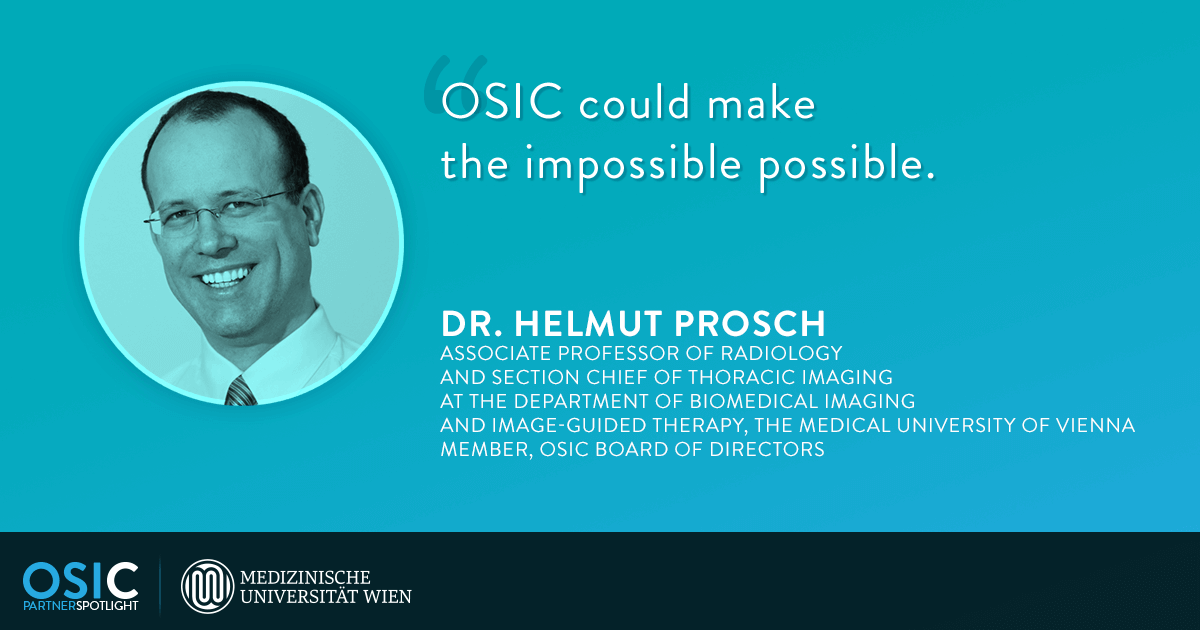
OSIC could make the impossible possible. Scientists and companies have joined forces and set up an unprecedented collaboration to push ahead research in fibrosing lung diseases. Fibrosing lung diseases are rare, but machine learning research in this field requires large datasets. With this consortium, we now have a platform that not only provides access to high-quality data but also enables international collaboration.
If you had a crystal ball, what do you think OSIC will have accomplished in the next five years?
I believe OSIC's efforts will have resulted in a better understanding of the pathology of fibrosing lung disease, and radiologists and clinicians will have access to software that allows them to predict disease progression and treatment response in individual patients.
What do you believe is distinctive about OSIC’s approach?
What makes OSIC so special is the quite unique cooperation of academia and industry in a field in which research is very challenging as it requires a large, high-quality dataset. Separately, neither individual research groups from academia nor researchers from industry have access to the diversity of data necessary for machine learning in this field. OSIC serves as an example of how collaboration between different groups can be successful.
In addition to this unique access to data, what other value do you see in being an OSIC member?
OSIC lifts international cooperation to a new level. It serves to not only stimulate AI research in fibrosing lung disease, but can be a model for how to set up similar consortia to improve research in other fields.